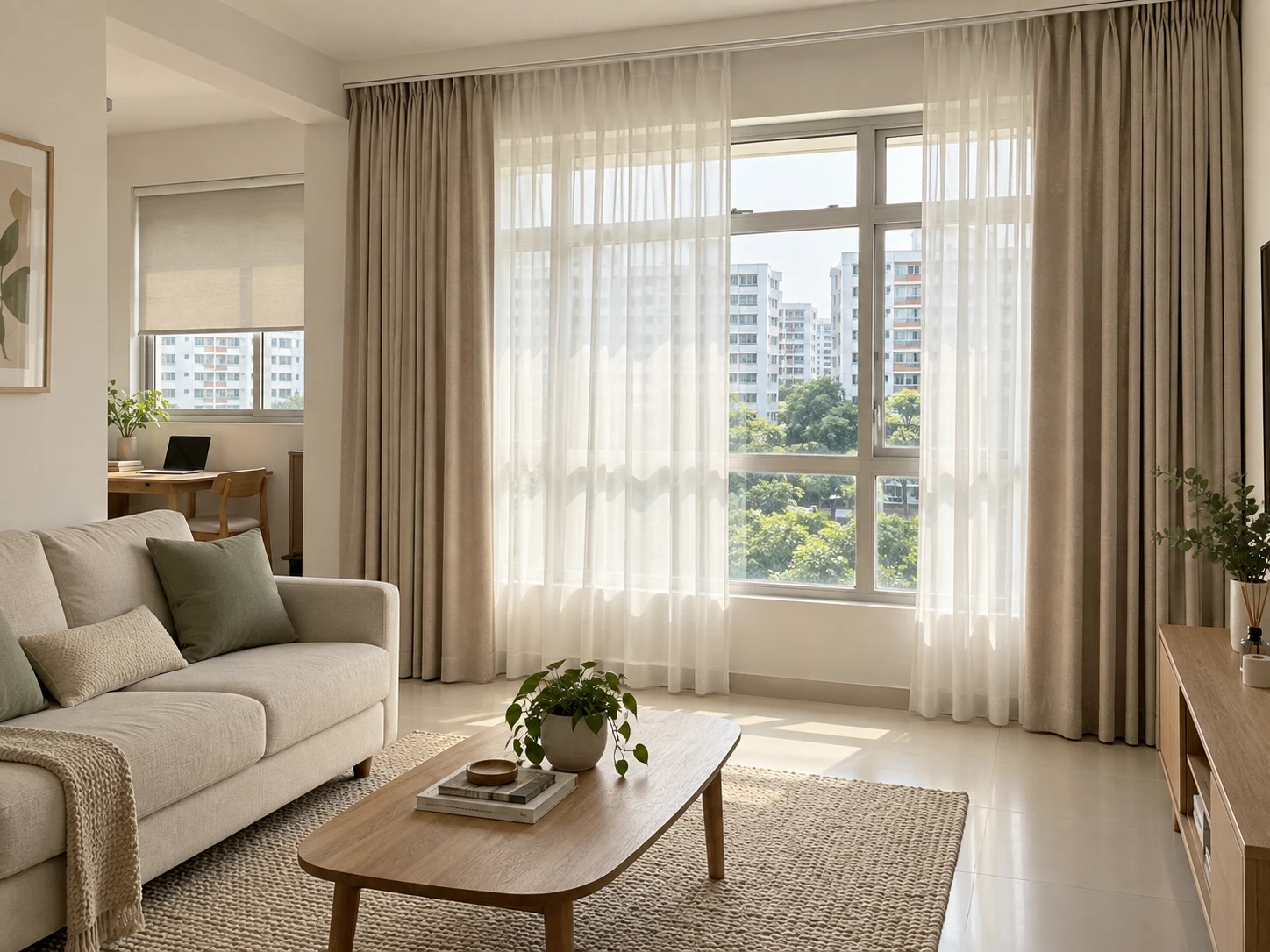
A window facing another block asks for different privacy from one beside a work desk. Explore full-room examples and fabric details, then choose around your actual furniture, sightlines and daily routine.
Elegant Seal collection image
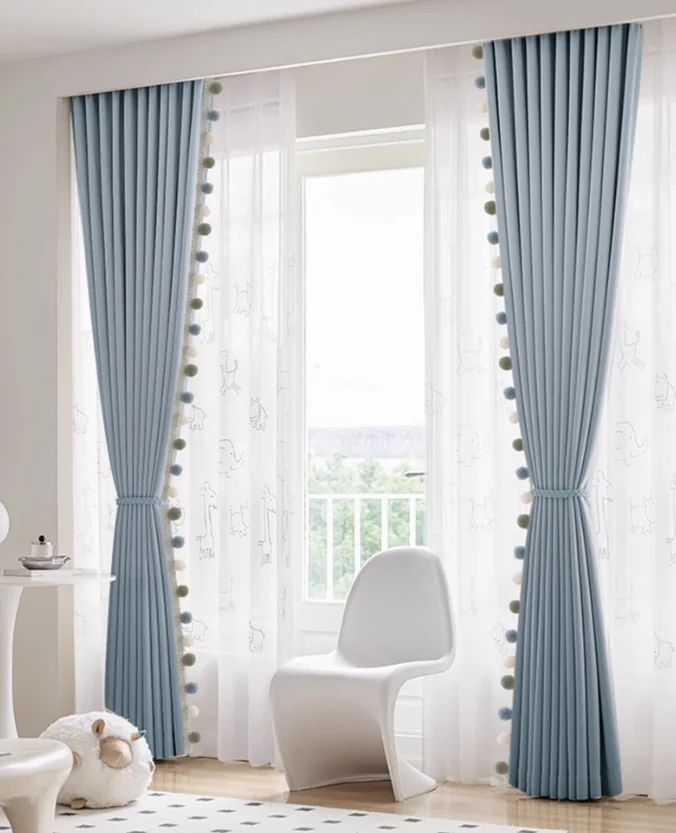
01 · Children’s rooms
Give a small corner its own character.
These blue outer curtains and embroidered elephant sheers bring colour and pattern to a child’s reading corner. The layers allow the decorative sheer and the closing curtain to do different jobs.
Options to explore
A patterned day curtain with a coordinating night curtain in a suitable heading.
Plan around
Sightlines from neighbouring blocks, the required sleep darkness and safe access to the window and controls.
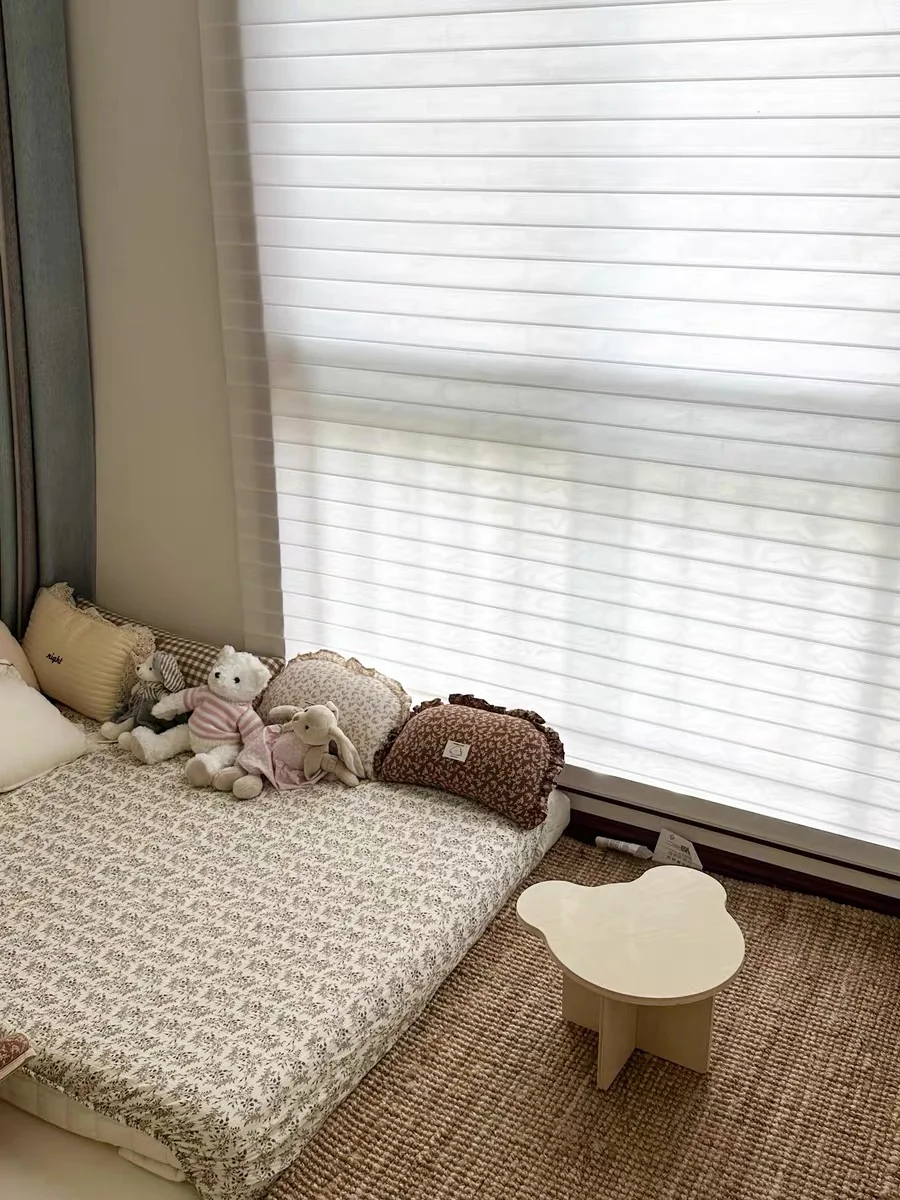
The horizontal fabric vanes in this bedroom create a different visual effect from curtain folds. This is a light-filtering example; choose a separate blackout solution if deeper darkness is the priority.
Options to explore
Shangri-La-style soft vanes, layered curtains or an opaque roller fabric.
Plan around
The required privacy when the room is lit at night, and how close the bed sits to the window.
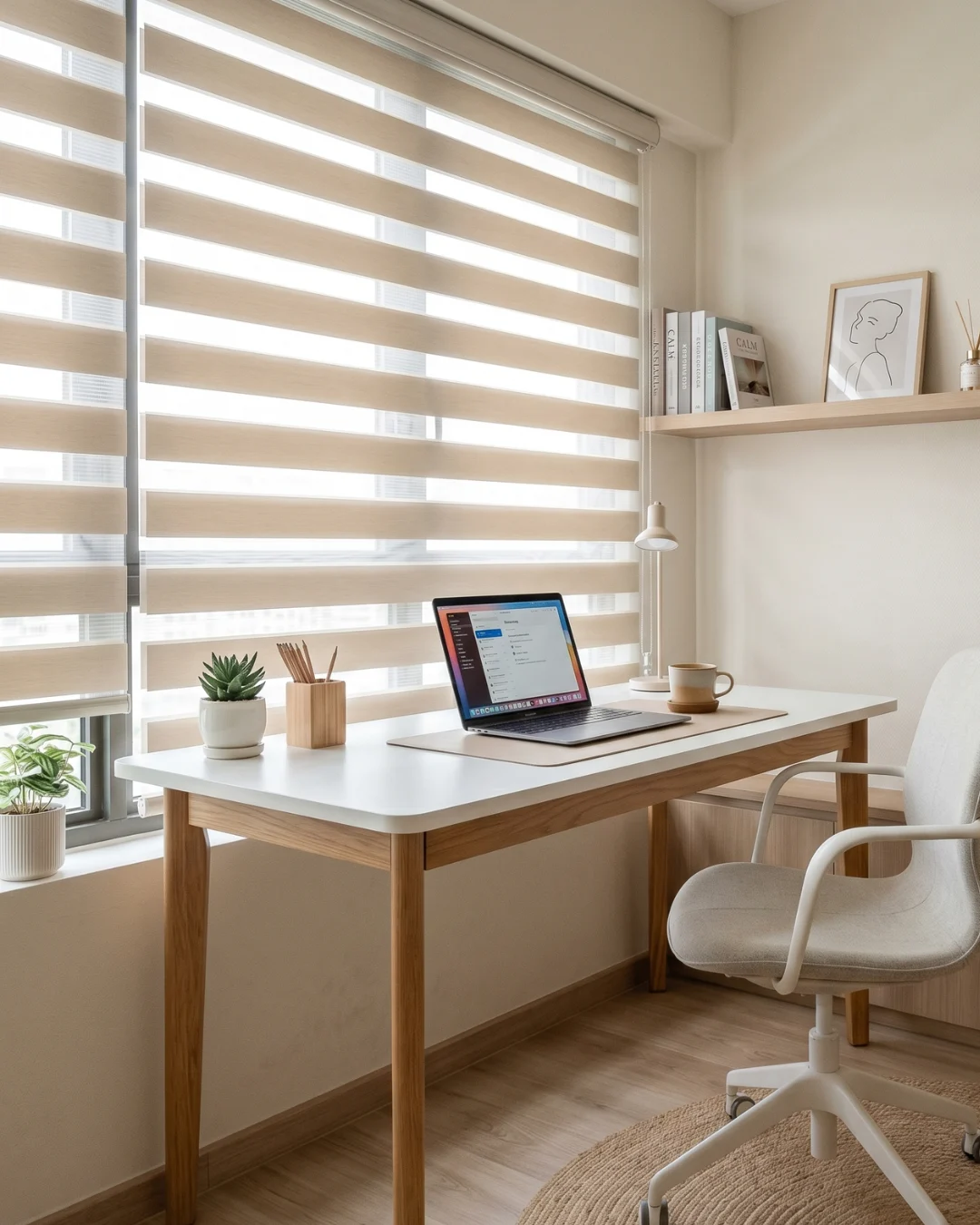
A study needs comfortable daylight as well as a clear work surface. Dual shades change the overlap of their bands; an adjustable slat blind offers another way to direct the light.
Options to explore
Dual shades, roller fabric or Venetian slats matched to the desk.
Plan around
Screen reflections, the window opening path and access to the blind control.
Sheer and night curtains framing an opening window · supplied room illustration
04 · Compact windows
Keep a simple outline at the window.
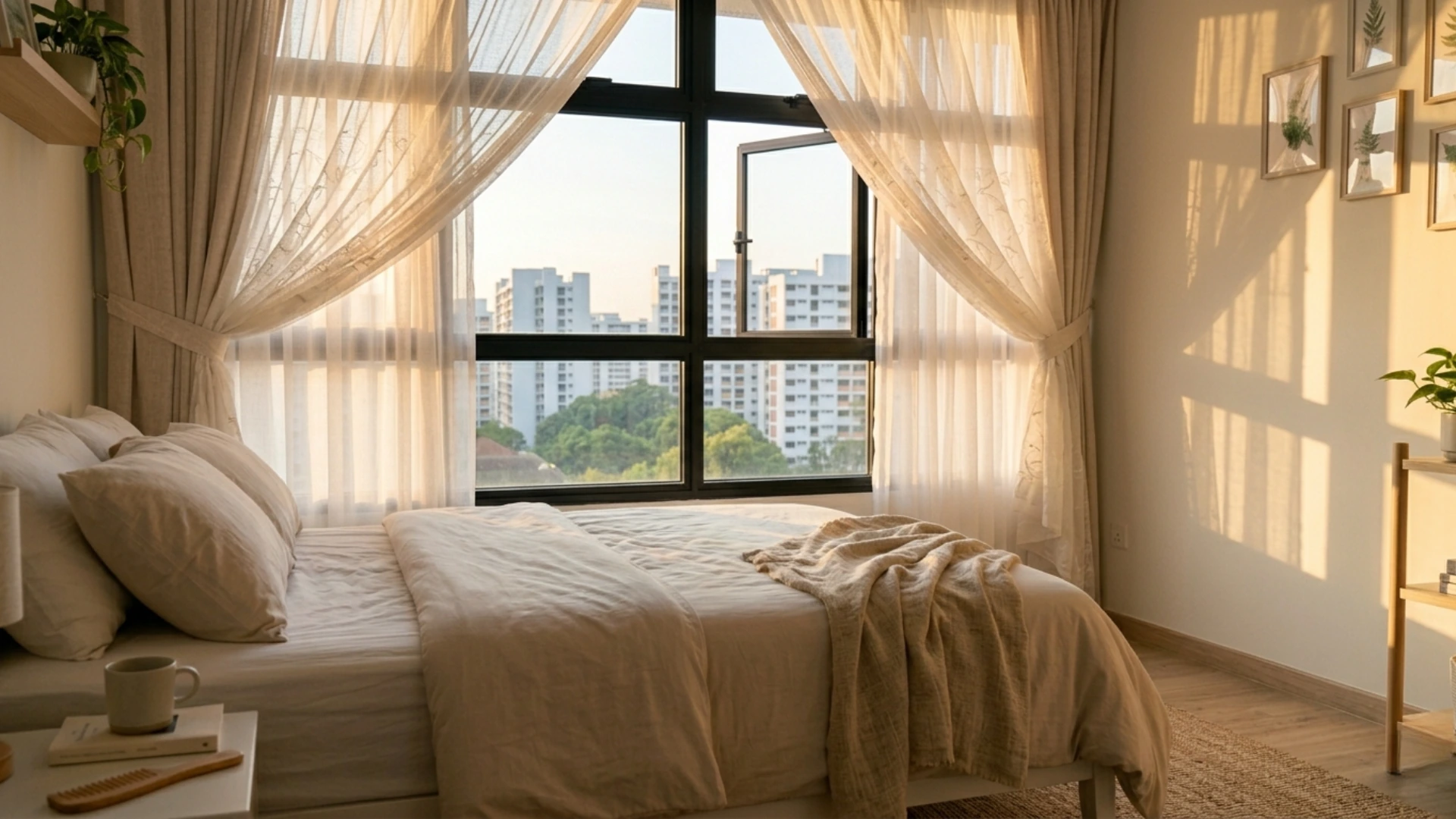
A sheer-and-night-curtain combination softens the strong afternoon light while keeping this compact bedroom calm. Drawing the layers neatly to each side leaves the opening window accessible and the view visually clear.
Options to explore
A slim double track with light sheers and compact-stack dimout or blackout curtains.
Plan around
The opening path of the window, curtain stack width, bedside clearance and evening privacy.
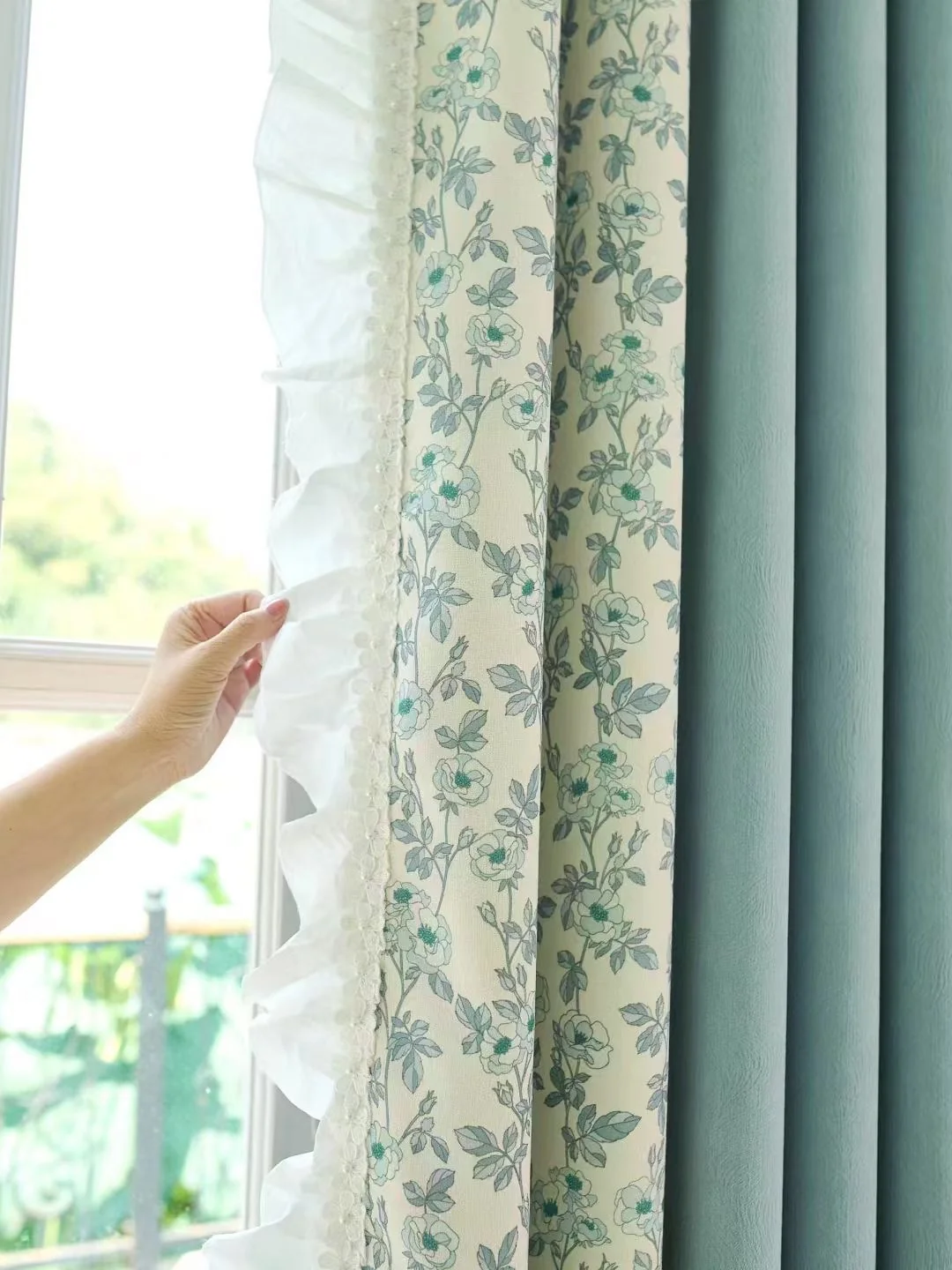
A small botanical pattern can connect a plain room to a teal or blue accent. The close-up lets you see the motif and coordinating plain curtain rather than relying on a distant room photograph.
Options to explore
A patterned sheer or decorative curtain paired with a quieter plain fabric.
Plan around
Pattern scale once the cloth is gathered, the amount of daylight and the colours already in the room.
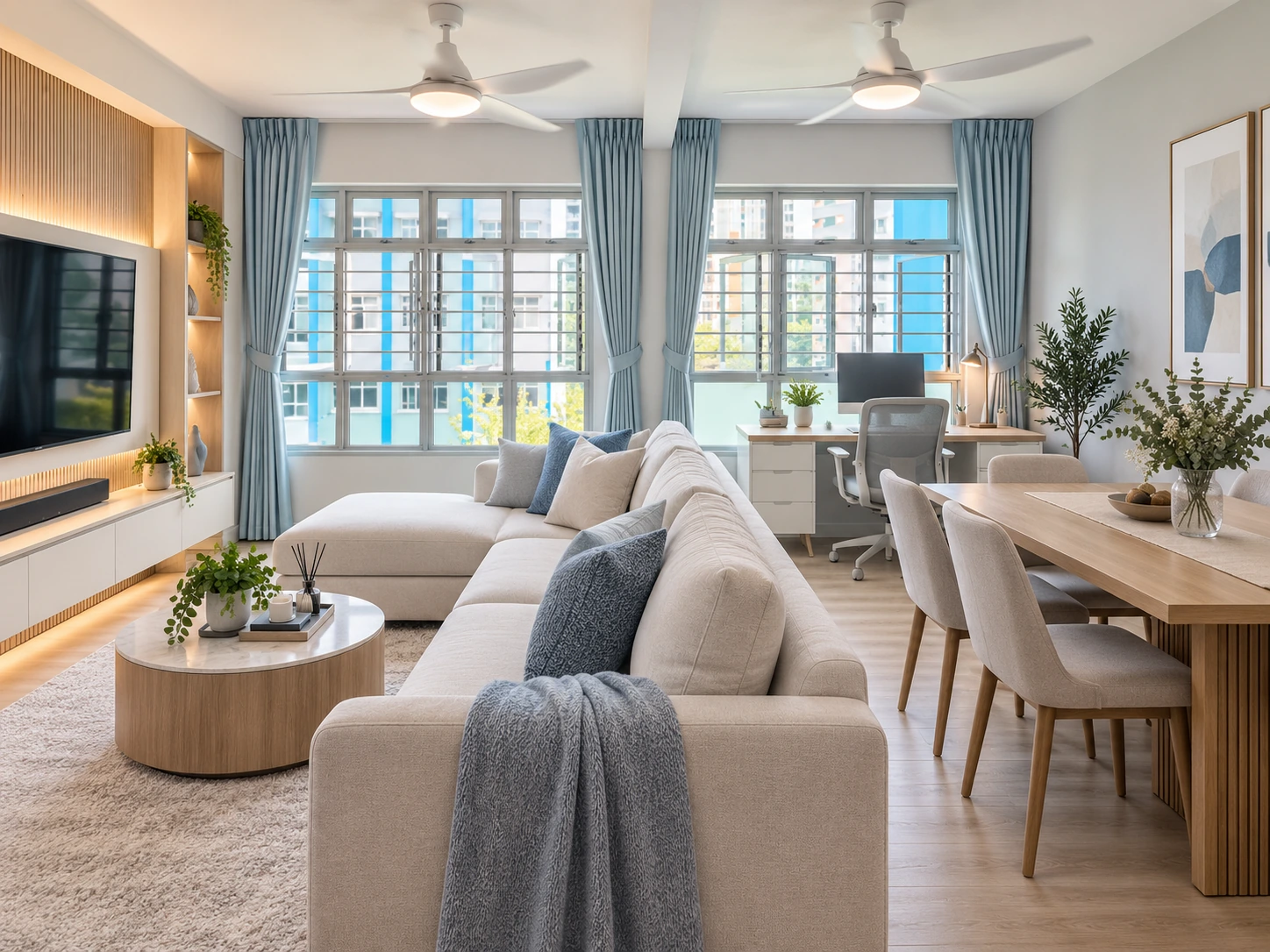
Soft blue curtains connect living, dining and work areas · room illustration
06 · Refreshing an existing home
Keep the room. Change its frame.
Keep the sofa, dining furniture and flooring you love, then use soft blue curtains to bring the living and dining areas together. For an existing flat, start with the pieces you want to keep and choose a fabric that complements them.
Options to explore
Warm woven fabrics, coordinating sheers and a heading suited to the room.
Plan around
Have existing tracks and fixing points checked before assuming they can carry the new curtain.
Check sightlines from neighbouring blocks and shared corridors.
02
Keep furniture, fans, handles and window openings clear.
03
Select care requirements that fit your household routine.
Light and privacy
Look at the actual window orientation, neighbouring sightlines and the room’s evening lighting. Treat the bedroom’s sleep requirements separately from the living room’s view.
Space and styling
Plan the fold or raised blind stack around furniture, handles and opening windows. Use a related palette across rooms while adapting the system to each space.
Before your consultation
Share your property type, rooms, preferred timing and a few photographs if available. Confirm final measurements, product availability and fabrication lead time with the team.
Your investment depends on the window dimensions, chosen fabric, layers, fullness, hardware, installation and access. Ask for an itemised quote with warranty and exclusions confirmed.
 elegant seal