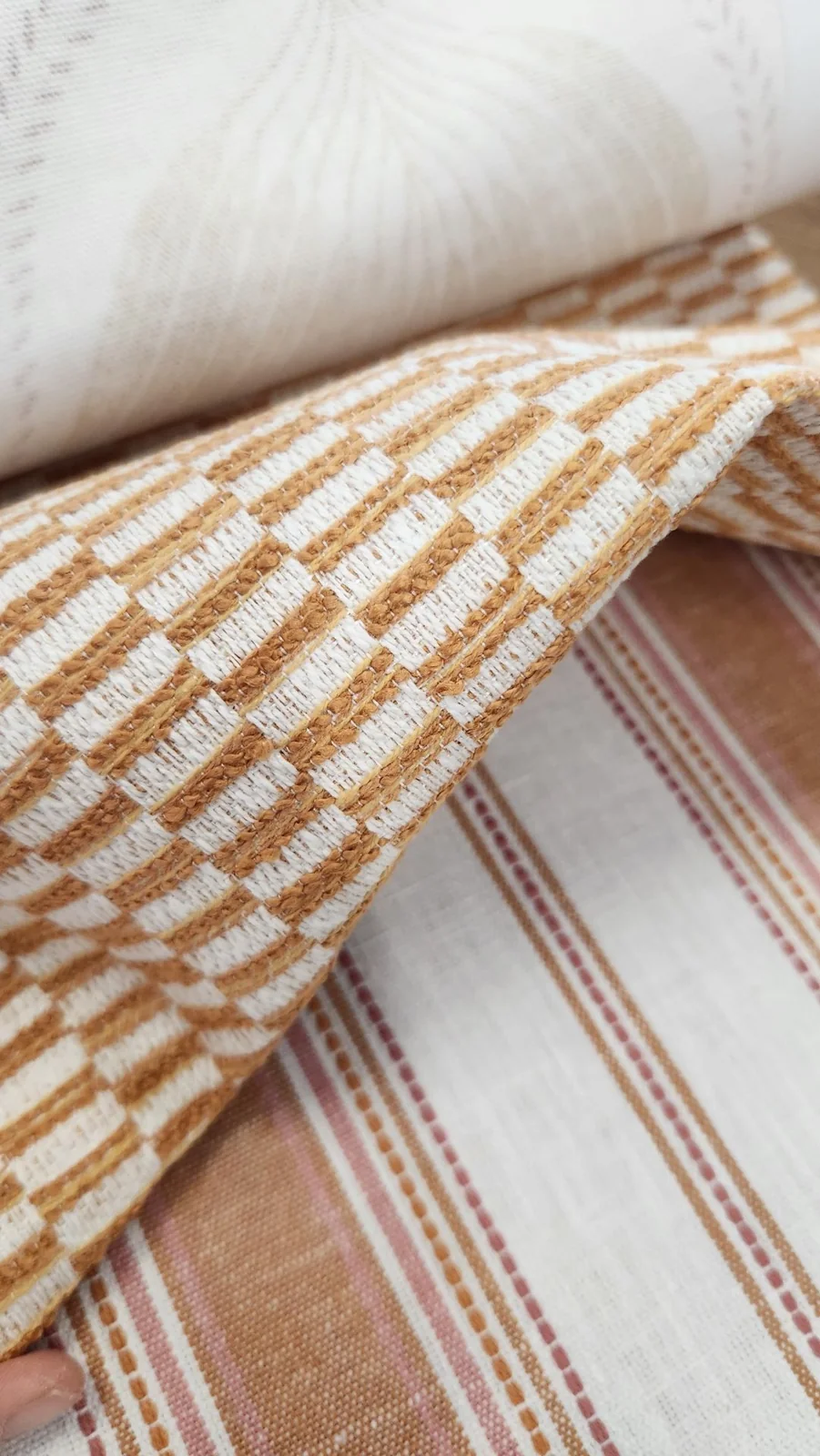
Dimout is a light-control choice that reduces light through the fabric. It does not specify the pleat style, fibre content or an identical percentage across every cloth. Choose the finish you like, then test the actual sample.
Dimout to blackout. Notice the fabric. Then the gaps.
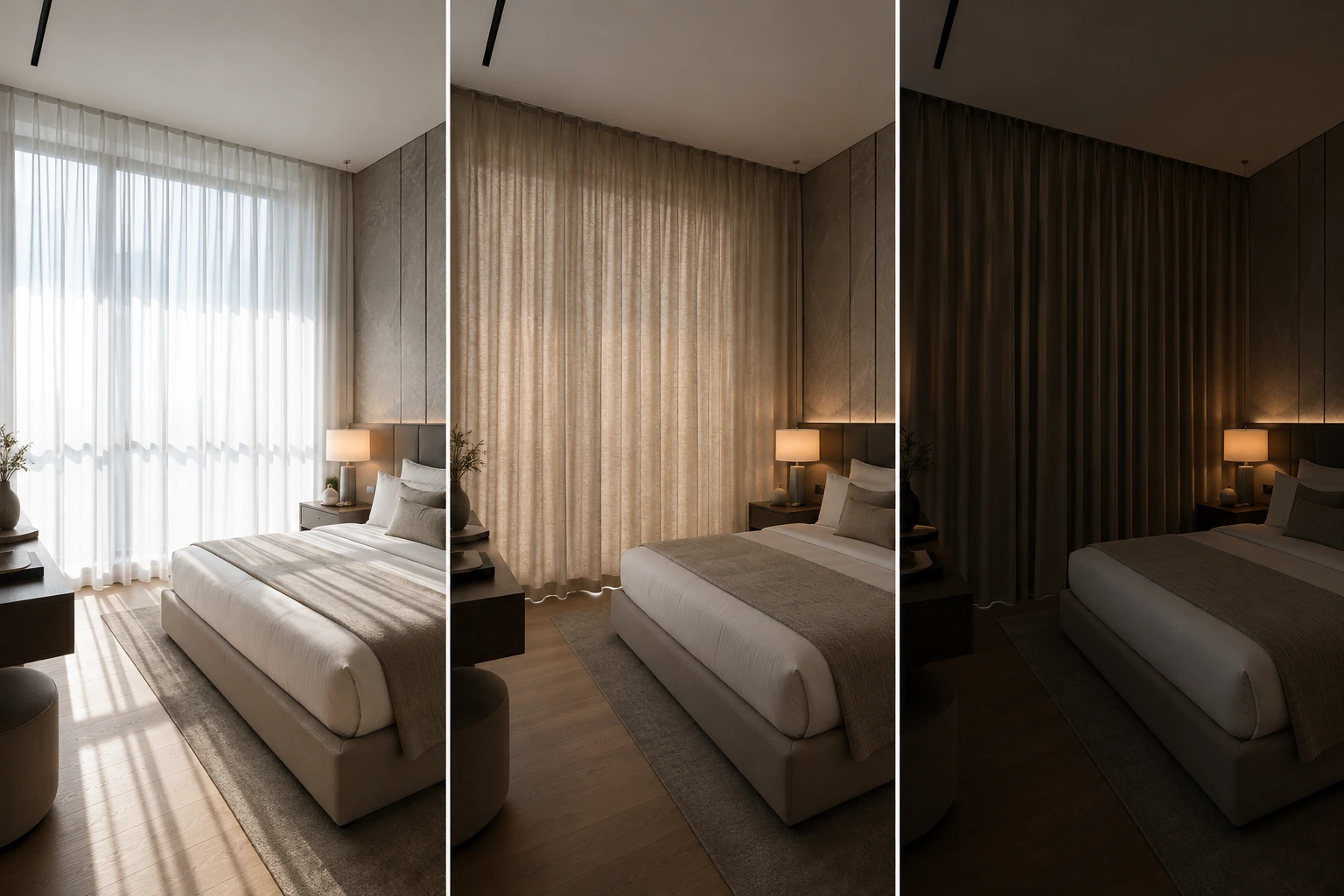
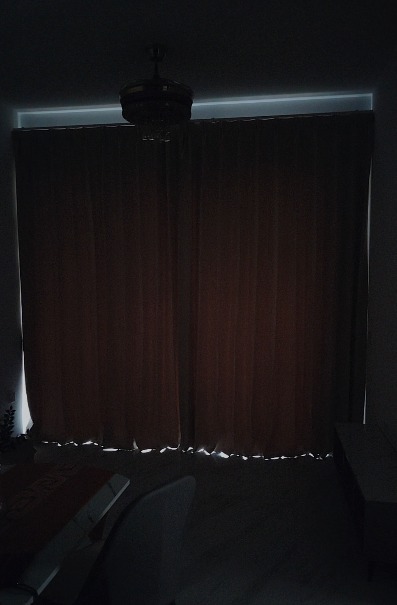
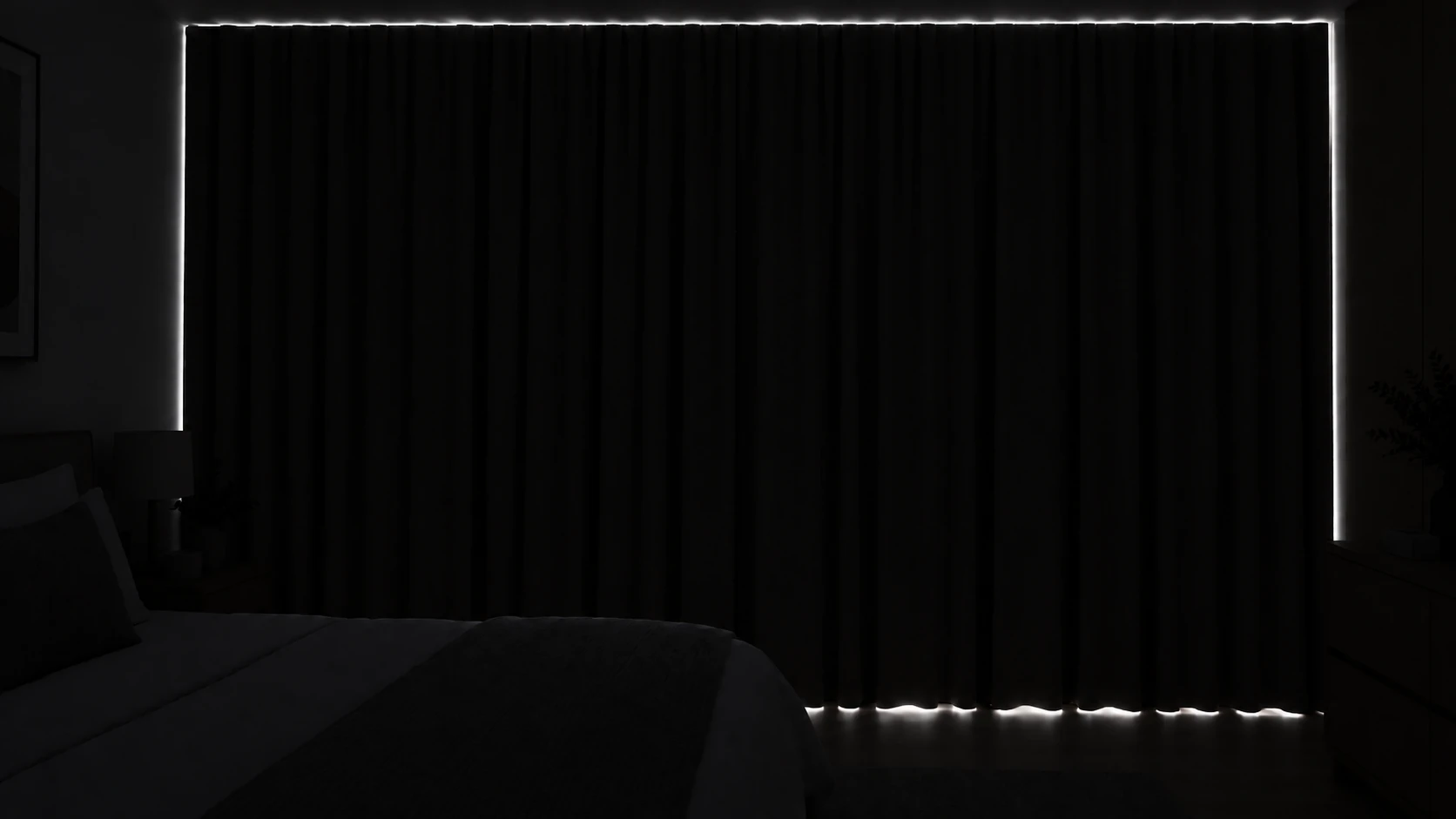
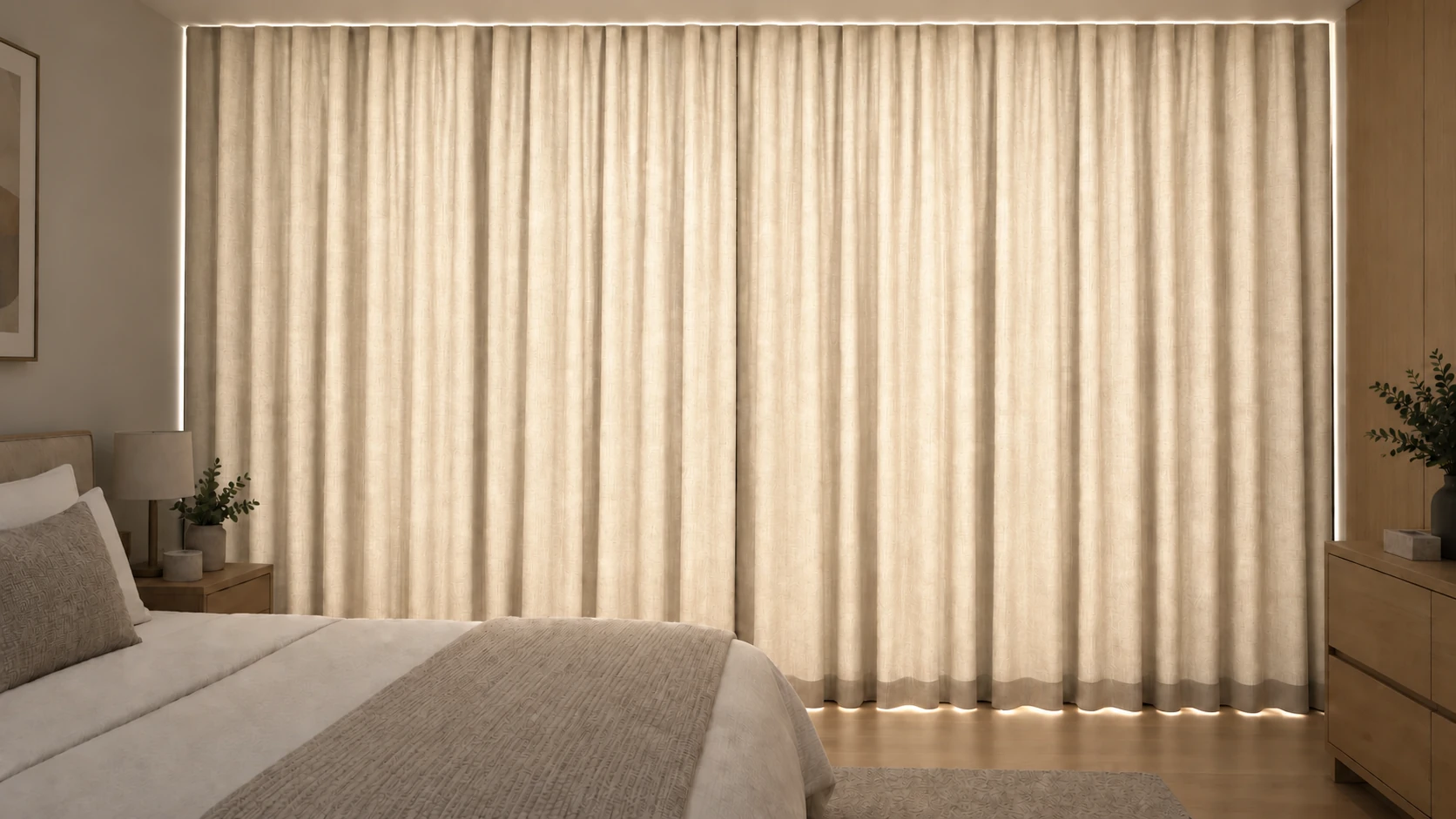
Move the slider to see less daylight passing through the closed curtain fabric. The indoor lights stay off. With no pelmet above the track, daylight can still enter through the top gap, even at the blackout setting.
01
Through the fabric
The dimout example has a visible glow through the cloth. The blackout illustration removes that transmitted glow.
02
Around the curtain
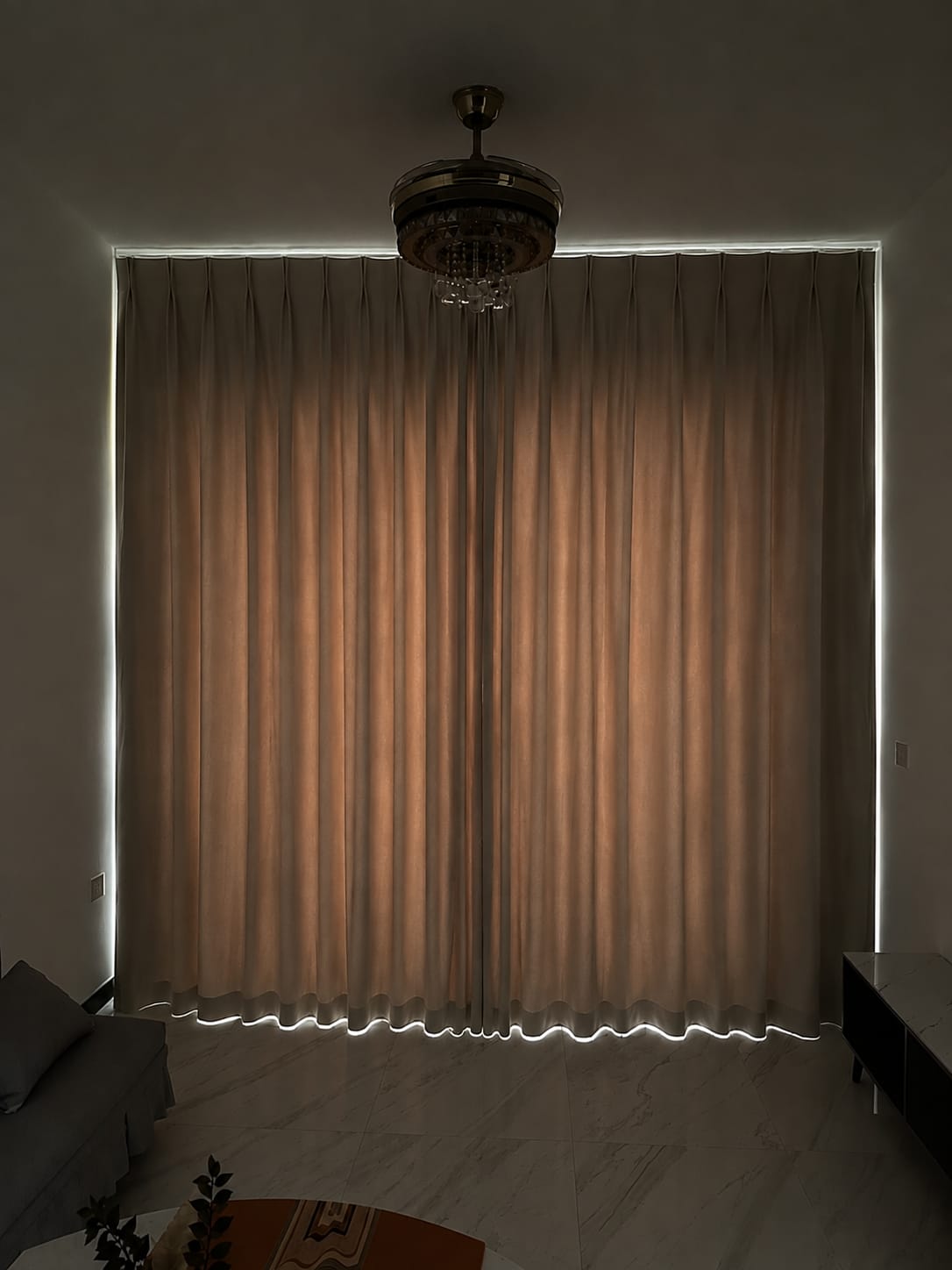
The uncovered top, side and floor gaps remain a separate path for daylight. Blackout fabric alone does not seal the window.
Real curtain references
Sheer to blackout · no pelmetThe same bedroom moves from sheer-filtered daylight, to a closed curtain with a warm glow, to blackout cloth with the room much darker. With no pelmet, the final result still depends on light at the top and edges.Dimout · no pelmetDaylight glows through the fabric and enters around the edges.Blackout · no pelmetThe blackout cloth removes the glow through the fabric, leaving the room substantially darker. Daylight is still visible around the uncovered top, sides and floor.
Photos supplied by Elegant Seal. Select a photo to view the original.
Bedroom illustration informed by Elegant Seal’s curtain examples. Percentages illustrate light passing through the fabric; they are not tested fabric ratings. Actual room darkness also depends on fitting, daylight and gaps around the curtain.
Dimout reference · 80% throughBlackout fabric · 0% through
Why is the top still bright? There is no pelmet covering the space above the curtain. Ask us to assess top coverage, side returns, centre overlap and hem clearance when planning a darker room.
 elegant seal