 elegant seal
CURTAIN CARE & CLEANING · SINGAPORE
Curtain care.
Beauty that lasts.
Curtain washing, everyday maintenance and on-site steam cleaning — guided by the fabric, the finish and the way you live.
The soft fall of a sheer. The texture of a night curtain. A beautifully sewn border. Thoughtful care helps preserve the details you chose for your home.
Ask about steam cleaning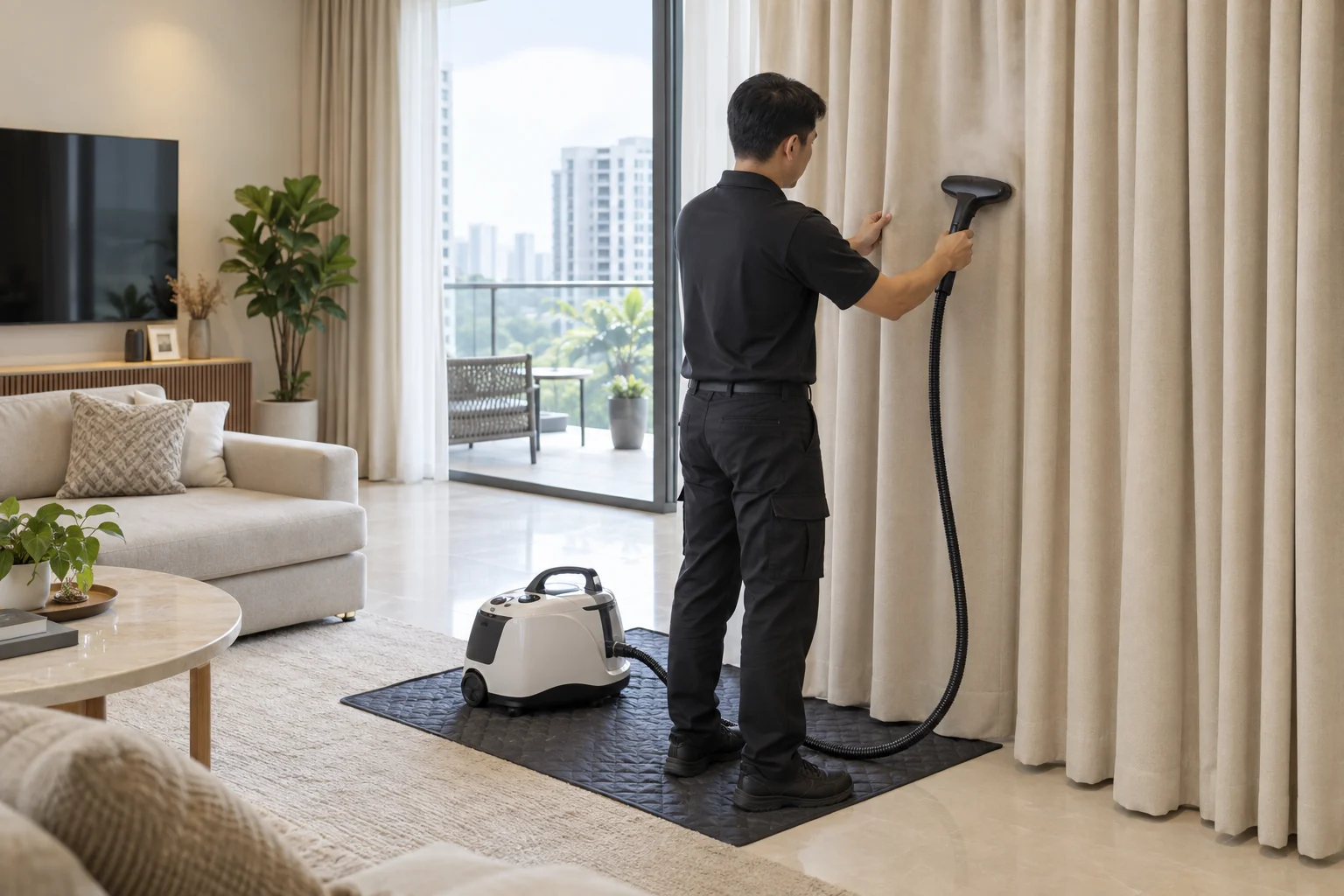
THE FIRST QUESTION
Can I wash or steam my curtains?
Only if the care instructions for the complete curtain allow it. Fibre, weave, colour, lining, blackout backing, trims and age all affect the choice. Start with gentle dust removal where suitable. For washing or steam, check the label and fabric code first; if either is missing, ask before treating.
Elegant Seal offers on-site curtain steam cleaning in Singapore for suitable curtains. An assessment comes before a treatment recommendation.
Light dust?
Begin with a gentle, regular routine and check the window and track too.
See DIY maintenanceLabel says washable?
Check the lining, trims, load capacity and drying instructions before removal.
Plan a home washDelicate, coated or unclear?
Share photos and the care label so we can discuss an appropriate service.
Request an assessmentCare symbols describe permitted treatments, not just fibre names. See GINETEX’s care-symbol guide.
A DIFFERENT CLOTH. A DIFFERENT ROUTINE.
Find the care your
curtain needs.
Use these as starting points, then follow the instructions supplied with your actual curtain. S-fold and double pleat describe the heading; they do not tell you whether the fabric can be washed.
01Polyester sheers & day curtainsProtect the airy weave.
Everyday care
Support the cloth while gently removing loose dust with a clean upholstery attachment on low suction, if the fabric permits it. Keep the nozzle away from loose threads.
Before washing
If the complete curtain is labelled washable, use its stated gentle programme and temperature. Remove detachable hooks; protect delicate panels in a suitable laundry bag without crowding the drum.
When to ask a specialist
A fine sheer can snag or distort. Ask for an assessment if it has embroidery, weighted hems, signs of sun damage or no readable care label.
Explore the curtain range02Cotton, linen & natural-fibre blendsPreserve the fall and finished length.
Everyday care
Record the curtain drop before cleaning. Check the fibre mix and the lining separately; a linen-look fabric may actually be polyester.
Before washing
Wash only when the completed curtain’s instructions allow it. Follow the specified drying method and avoid improvising with a hotter cycle to remove a mark.
When to ask a specialist
Full-length, lined or interlined curtains deserve a shrinkage assessment before wet cleaning. Let a specialist advise when the face cloth and lining need different treatment.
Explore the curtain range03Woven dimout & night curtainsOpacity is not a washing instruction.
Everyday care
Check whether darkness comes from a dense weave, an added lining or a coating. Examine the reverse and retain the fabric code.
Before washing
Some woven dimout fabrics permit washing; others do not. Follow the care sheet for the exact cloth, lining and heading, including drying and ironing limits.
When to ask a specialist
Ask before steaming a bonded lining or an unfamiliar backing. The name “night curtain” does not establish heat or moisture tolerance.
Explore the curtain range04Coated blackout & lined curtainsThe backing needs its own protection.
Everyday care
Look for flaking, stickiness, cracks or layers separating before cleaning. Photograph deterioration and avoid rubbing the coated reverse.
Before washing
Use only the named manufacturer’s method. Do not assume that dry cleaning is the safe fallback when home washing is prohibited; some coatings prohibit both solvents and steam.
When to ask a specialist
Arrange an assessment before any steam treatment. Cleaning cannot repair a failing coating; replacing the lining may be a better option if the face fabric remains sound.
Explore the curtain range05Velvet & other pile fabricsKeep the surface soft, not flattened.
Everyday care
Avoid stiff brushing, strong suction and grasping the pile to pull curtains shut. Use the intended draw mechanism and handle the cloth gently.
Before washing
Do not treat velvet as a single fibre: the pile may contain different materials. Follow its specialist care instructions instead of a generic machine-wash recipe.
When to ask a specialist
Seek professional advice for pressure marks or crushed pile. Do not press a hot iron onto the face or attempt DIY steam treatment without explicit fabric approval.
Explore the curtain range06Silk, viscose & delicate lustrous fabricsProtect the sheen and handle.
Everyday care
Check for fragile areas, especially beside sunny windows. Keep sprays and wet cleaning cloths away until the fabric’s care method is confirmed.
Before washing
Do not infer washability from a smooth finish or a “silk-look” description. Ask for the composition and approved method before adding water, detergent or steam.
When to ask a specialist
Treat missing labels, old stains and mixed-fibre linings as reasons for a specialist assessment. Show the cleaner every contrasting panel and decorative element.
Explore the curtain range07Lace, embroidery, beads, tassels & joined panelsCare for the detail that makes it yours.
Everyday care
Inspect seams and trim attachments. Support tassels and beads during handling; avoid catching them in a vacuum nozzle or twisting a decorative leading edge.
Before washing
The most delicate component governs the plan. Washable base cloth does not make a curtain with glued trims, metallic thread or contrasting borders machine washable.
When to ask a specialist
Request a colour-transfer and attachment check before wet or steam treatment. Discuss detachable tiebacks separately and ask whether loose stitching should be repaired first.
Explore the curtain range08Outdoor & patio blind fabricsRemove debris before it builds up.
Everyday care
Clear loose dirt as the outdoor fabric maker advises. Keep guides and lower bars clear of debris, and allow damp fabric to dry fully before prolonged storage.
Before washing
Use the exact blind fabric’s cleaning sheet for soap, rinsing and drying. Do not soak the mechanism or assume that a coated fabric is machine washable.
When to ask a specialist
Persistent staining, coatings and water-repellent finishes may need a specialist method. Confirm whether the finish requires maintenance after cleaning.
Explore the curtain rangeSMALL HABITS. A MORE BEAUTIFUL HOME.
Your DIY curtain
care routine.
Make care manageable. Inspect regularly and clean according to the condition of the cloth, rather than washing an entire home on an inflexible schedule.
Every week or two
Check the hems and leading edges for dust. Where permitted, use low suction with a clean upholstery attachment, supporting the cloth so it cannot be drawn into the nozzle. Stop if threads or trims catch.
When a spill happens
Lift off loose residue and gently blot liquid with a clean white absorbent cloth; do not rub. Check the care instructions before adding any cleaner. Test only an approved method in a hidden area and let it dry before judging the result.
When you clean the room
Remove dust from the sill and accessible track with the appropriate dry tool. Keep furniture, sharp edges and wet mops clear of the curtain. Do not spray water into tracks, motors, switches or sockets.
Review a deeper clean
A yearly review is a useful starting point; cooking, pets and open windows may call for more frequent attention. Inspect for stains, loose seams and deteriorating linings before choosing a cleaning method.
ONLY WHEN THE COMPLETE CURTAIN IS WASHABLE
How to plan a home wash.
Read and record
Photograph the label, heading and hook positions. Note the panel lengths, lining and any fragile areas before taking anything down.
Remove safely
Use stable access and help with heavy panels. Remove detachable hooks and accessories as instructed. Leave very high, heavy or complex installations to a professional.
Choose the permitted programme
Follow the stated wash temperature, cycle and detergent guidance. Hand-wash only means hand-wash only. Keep contrasting colours separate and avoid overloading the machine.
Protect the construction
Do not scrub a coating or twist trims. Avoid bleach, stain mixtures and softeners unless specifically approved for the complete curtain.
Dry as the label directs
Use the specified line, flat or tumble-drying method. Rehang damp only if the care guidance and hardware allow it, with protection below. Never hang dripping, heavy panels on an unsuitable rail.
Refinish gently
Once dry, check hems, folds and hook positions. Iron or steam only when permitted; respect the temperature and steam restrictions. Do not press directly on coatings or decorative details.
Missing label or mixed instructions? Pause the wash. Send us the fabric code, photos of both sides and any previous cleaning history. A small hidden test does not establish that an entire curtain can be safely washed.
ELEGANT SEAL · ON-SITE CURTAIN STEAM CLEANING
A considered refresh.
In the comfort of home.
For suitable fabrics, on-site treatment lets your curtains be attended to while hanging. It can be a practical option when taking down large panels is inconvenient — with the method chosen around the fabric and its finish.

Start with a fabric assessment.
Tell us what you want to improve: everyday soiling, a particular mark or a curtain that needs refreshing. Share the care label, lining details, approximate height and photographs so we can discuss whether on-site steam cleaning is appropriate.
Steaming applies heat and moisture to suitable cloth. It is not the same as laundering, solvent dry cleaning or hot-water extraction. The recommended service should reflect the actual cleaning need.
Stains, fading and damage need different expectations. Steam is not a repair for a cracked blackout backing, and a stubborn mark may need a different treatment. We can discuss the likely outcome before you commit.
Enquire about my curtainsPlan your visit around these four checks.
- 01
Fabric & condition
Review the label, coating, lining, seams and trims. Confirm suitability and any test area before treatment.
- 02
Access & preparation
Agree the working space, floor and furniture protection, curtain height, power access and a safe area around the equipment.
- 03
Method & scope
Agree which panels and marks are included, how loose dust will be addressed, the approved treatment and any exclusions.
- 04
Drying & finish
Plan ventilation and drying around the room. Keep folds open until fully dry and review the finish and aftercare advice.
What affects the quotation?
Number of panels, width and drop, layers, fabric and trims, condition, access and the agreed cleaning scope. Request a quotation for your actual curtains; the enquiry is not a confirmed cleaning appointment.
Before the visit
Clear the area around the window, secure pets and keep children away from the working area. Point out existing marks, loose seams and any previous treatment. Avoid applying a new stain remover just before the assessment.
CARE FOR LONGER. WASTE LESS.
Keep what still
belongs in your home.
A tired lining or loose trim need not mean starting again. Before replacing a curtain you love, consider what can be repaired, refreshed or reused.
Repair the detail
Ask whether loose hems, worn hooks, tiebacks or damaged sections of trim can be repaired. Fix a snagging track before it repeatedly pulls on the fabric.
Replace only what has failed
If the face cloth is sound, ask whether a separate lining can be renewed. Check whether existing tracks are safe and compatible before replacing hardware.
Pass on thoughtfully
Offer clean, usable curtains with dimensions and care details. Ask a donation or textile-collection provider whether it accepts curtains, coatings and trims. Keep damp, mouldy or heavily damaged fabric out of reuse donations.
WHEN YOU WOULD RATHER NOT DIY
Our cleaning services
and what they cost.
Elegant Seal cleans curtains two ways. Prices are published in full, and every quotation follows a fabric assessment — some fabrics and coatings cannot be treated at all.
Curtain dry cleaning
From $15 a kilogram
Collected, cleaned off site and returned in 5 to 7 days. Curtains are priced by weight; take them down yourself for an additional 20% off, on a minimum order of $100.
See dry cleaning pricesOn-site steam cleaning
From $180 a visit
Steamed while hanging, usually within three hours. Packages are priced by rooms and layers, for curtain heights below 300 cm.
See steam cleaning packagesYOUR CARE QUESTIONS
Before you wash.
Before you book.
Can I put every curtain in the washing machine?
No. Check the complete curtain’s care instructions, including lining, coating and trims. A washable fabric still needs a suitable machine capacity and the specified washing and drying programme.
Can I steam blackout curtains?
Only when the exact fabric and backing permit it. Some blackout manufacturers expressly prohibit steam cleaning. Share the care label and photographs of both sides before booking a treatment.
Does Elegant Seal offer on-site curtain steam cleaning?
Yes. Enquire about Elegant Seal’s on-site steam-cleaning service in Singapore. Suitability, access, scope and pricing need to be assessed for your curtains before a booking is confirmed.
Will steaming remove every stain?
No. Old stains, grease, fading and damaged coatings may need a different approach or may be permanent. Ask what can realistically be improved before agreeing to a treatment.
Can curtains be cleaned while hanging?
Suitable curtains can be steam treated in place after assessment. Other fabrics need removal and a different cleaning method. The curtain’s construction and access determine the approach.
How long will my curtains take to dry?
Drying depends on the cloth, layers, treatment, room ventilation and humidity. Ask for advice for your actual room and keep the panels spread out until fully dry; do not pack damp folds together.
How often should I clean my curtains?
Use a regular light-dusting routine and inspect more often in rooms exposed to cooking, pets or open windows. Review the need for a deeper clean around once a year, adjusting to actual soil and the fabric’s care guidance.
Should I throw away curtains with a damaged lining?
Ask whether the lining can be replaced while retaining a sound face fabric. A repair assessment can also identify loose hems, worn hooks or damaged trim that do not require replacing the whole curtain.
What should I send with a cleaning enquiry?
Send clear photos of the whole curtain, front and reverse, care label, trims and any marks. Include approximate height, number of panels, access constraints and the contact number you want us to use.
A LITTLE CARE. A LASTING IMPRESSION.
Let’s care for
the curtains you love.
Show us your fabric, your window and what needs attention. We’ll help you discuss the next step.
Ask about on-site steam cleaning Explore curated designer curtains