 elegant seal
CURTAINS · OPERATION & FINISHING
High-temperature
curtain shaping.
Beautiful cloth deserves a considered fall.
Colour and texture draw you in. The way a curtain falls brings the room together. Professional shaping arranges and sets the folds of suitable fabric, helping a tailored curtain hang with a calmer, more even rhythm.
Plan my curtain finishTHE FINISH MAKES A DIFFERENCE
The same sage cloth.
A more composed drape.
Look at the fold spacing, the leading edge and the way the hem falls. Shaping refines the presentation of the cloth; it does not change its colour, sewn heading or light-control specification.
A less settled fall
More orderly folds
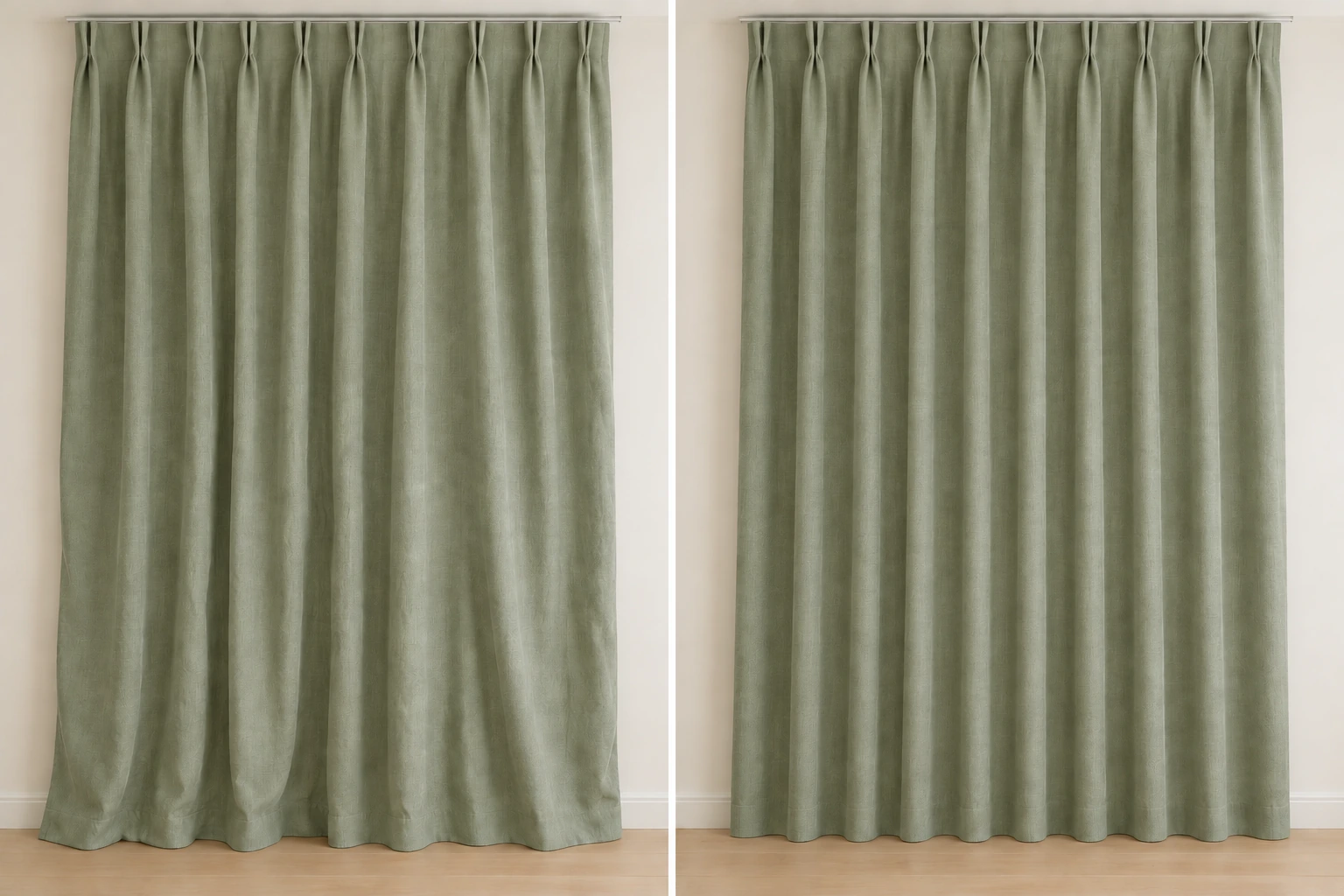
More even folds
A considered rhythm from heading to hem helps the curtain look composed across a broad window.
A neater fall
Arranging and setting suitable cloth can help reduce a flared or unsettled appearance at the edges and lower folds.
Easier everyday dressing
A trained fold can be easier to guide back into place after opening. Care and occasional redressing still matter.
A good finish starts with good making: appropriate fullness, straight seams, balanced hems and correctly fitted hardware still matter.
FROM WORKROOM TO WINDOW
Four stages.
One thoughtful finish.
This illustrates a typical professional shaping sequence. The actual equipment and treatment are selected after checking the complete curtain.
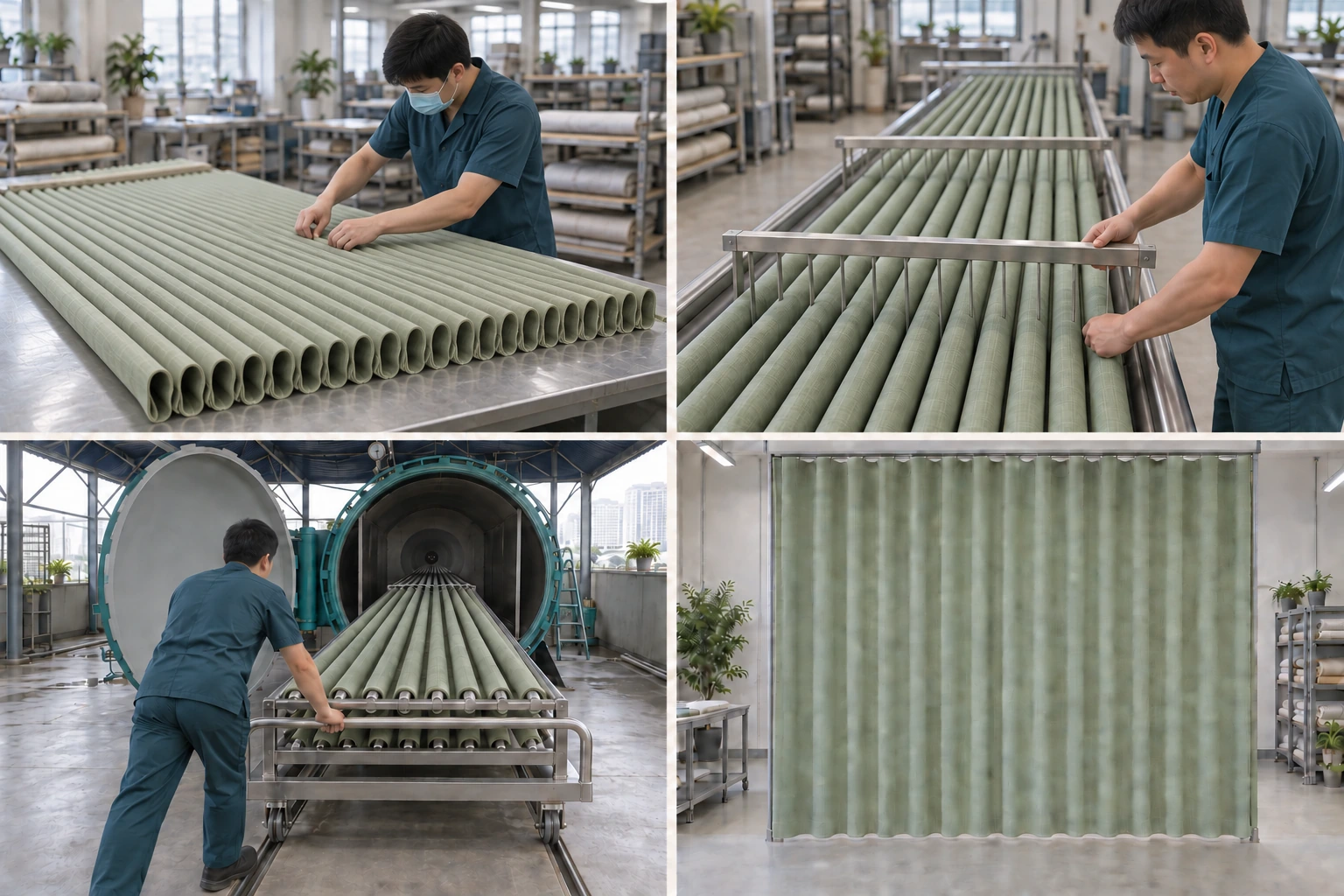
- 01
Arrange the folds
After checking the cloth, lining and trims, the workroom arranges the sewn panel into its intended folds. Spacing is aligned from the heading down to the hem.
- 02
Support the shape
The arranged folds are supported on a shaping rack or mould. This keeps the intended form in place during treatment, with a setup suited to the panel and heading.
- 03
Apply controlled heat
A professional setting cycle applies controlled heat or steam to the supported fabric. The workroom selects the method, temperature and duration for the approved material and equipment.
- 04
Cool, inspect & finish
The supported cloth cools before release. The panel is then hung and checked for fold alignment, drape and edge behaviour, and packed along its folds for delivery.
Why heat and cooling matter
Thermoplastic fibres such as polyester can be set into folds using controlled heat. Cooling helps retain the formed shape. The finished curtain’s response also depends on its construction and care; later excessive heat can relax the folds. A higher temperature is not automatically a better finish.
Textile background: WJEC heat-setting explanation (PDF, page 33)CHOOSE THE FINISH WITH THE FABRIC
Made for the cloth.
Never one setting for all.
Polyester & suitable blends
Often candidates for heat setting. Confirm the exact composition, finish and approved process using the fabric code.
Linen, cotton & natural blends
May respond to pressing and dressing differently. A relaxed natural drape may suit the design; lasting fold retention needs a sample assessment.
Blackout or coated fabrics
Assess the backing and lining as well as the face fabric. A treatment must suit every layer of the finished curtain.
Velvet, silk, sheers & decorative trims
Use a specialist assessment for delicate surfaces, pile, embroidery, beads or adhesives. A gentler finish may be more appropriate.
Include the finish in your quote
Ask Elegant Seal to confirm fabric and lining codes, heading style, fullness, shaping suitability, the expected finish and any additional charge before fabrication. Agree on care instructions and whether refinishing may be needed after cleaning.
Discuss my fabric and finishAFTER INSTALLATION
Help the folds
stay beautifully dressed.
Shaping is a finishing treatment, not a washability certificate. Follow the label for the fabric, lining and decorative details together.
Read our curtain care guide- Guide the folds gently. After opening or closing, let the cloth follow its intended folds. Avoid pulling one edge sharply or tying a tight band across it.
- Keep dust under control. Use the gentle dust-removal method allowed by the care label. Keep the track and gliders clear.
- Clean by the label. Machine-wash or tumble-dry only if the complete curtain’s instructions expressly allow it. A shaped curtain is not automatically washable.
- Ask before applying heat. Follow the approved steaming or ironing method. Never copy a workroom temperature onto a domestic appliance.
- Redress after cleaning. Rehang and arrange the folds as instructed. If the curtain has lost its intended fall, ask about professional assessment and refinishing.
A LITTLE MORE CLARITY
Questions about curtain shaping
Does every curtain need high-temperature shaping?
No. It is most useful when you want a more ordered fall and the fabric and heading suit the process. Some fabrics naturally drape well, while a relaxed linen look may be the intention. Ask to compare a finished sample.
Is 180°C the right temperature for every curtain?
No. Temperature, moisture and cycle duration depend on the fabric, backing, trims and equipment. A temperature quoted for one product is not a setting to use on another curtain or a home iron.
Will the folds last after washing?
Fold retention depends on the cloth, treatment and care. Shaping does not make every curtain machine washable or tumble-dryer safe. Follow the care instructions for the complete curtain and ask whether it needs professional refinishing after cleaning.
Does shaping turn a curtain into S-fold?
No. The sewn heading, tape, gliders and track create the heading style. Shaping is a finishing choice for compatible curtains; it cannot replace the correct construction or hardware.
Is this the same as on-site steam cleaning?
No. Shaping supports folds during a controlled workroom finishing process. On-site steam cleaning is a separate maintenance service for suitable curtains and should not be assumed to recreate a factory heat-set finish.
THE FINAL DETAIL, CONSIDERED
Choose your cloth.
Let’s consider its fall.
Bring a fabric sample or share the label, heading style and a photo of your window. We’ll help you discuss a suitable finish.
